

Tight tolerances are a cornerstone of precision CNC machining, defining the allowable deviation from a part’s ideal dimensions. In industries like aerospace, medical, and defense, a few microns can mean the difference between success and failure.
These tolerances ensure that parts fit, function, and perform as expected. When manufacturers consistently hit tight tolerances, they reduce part failure, improve safety, and deliver higher value. This article explores what tight tolerances really mean, why they matter, and how experienced shops maintain them.
Table of Contents
What Do Tolerances Actually Represent?
Tolerances are not just measurements—they’re agreements between designer and machinist. A +/- .005″ spec might seem small, but in precision applications, it’s relatively loose. High-end parts often call for +/- .0002″ or better.
These tolerances account for thermal expansion, material inconsistencies, and tool wear. Defining acceptable variation is what separates well-functioning assemblies from costly mismatches. Understanding this scale is crucial when quoting or designing for CNC manufacturing.
Where Tolerances Matter Most
Not all parts require extreme accuracy. But for mission-critical components—like jet engine brackets, surgical tools, or hydraulic seals—tight tolerances ensure alignment, sealing, balance, and wear resistance.
Assemblies with moving parts rely heavily on matched tolerances to maintain friction levels and prevent failures. For these customers, precision isn’t a luxury—it’s a necessity. And shops capable of delivering on those specs stand out in the marketplace.

The Cost of Precision
The tighter the tolerance, the more expensive the part. Why? Because extreme precision requires better tools, slower feeds, multiple setups, and more inspection steps. Sometimes the cost isn’t in the cutting—it’s in the verifying.
While it may be tempting to over-specify tolerances, doing so can inflate machining costs unnecessarily. Experienced engineers and machinists often work together to optimize tolerances for function and economy.
Holding Tight Tolerances Over Time
Maintaining precision isn’t just about having the right machine—it’s about consistency over time. Tool wear, material behavior, temperature changes, and machine alignment all affect repeatability.
Shops that maintain tight tolerances day in and day out rely on rigorous processes: in-process checks, thermal management, scheduled maintenance, and tool life monitoring. This stability is what turns a capable shop into a trusted partner.
Inspection and Measurement Methods
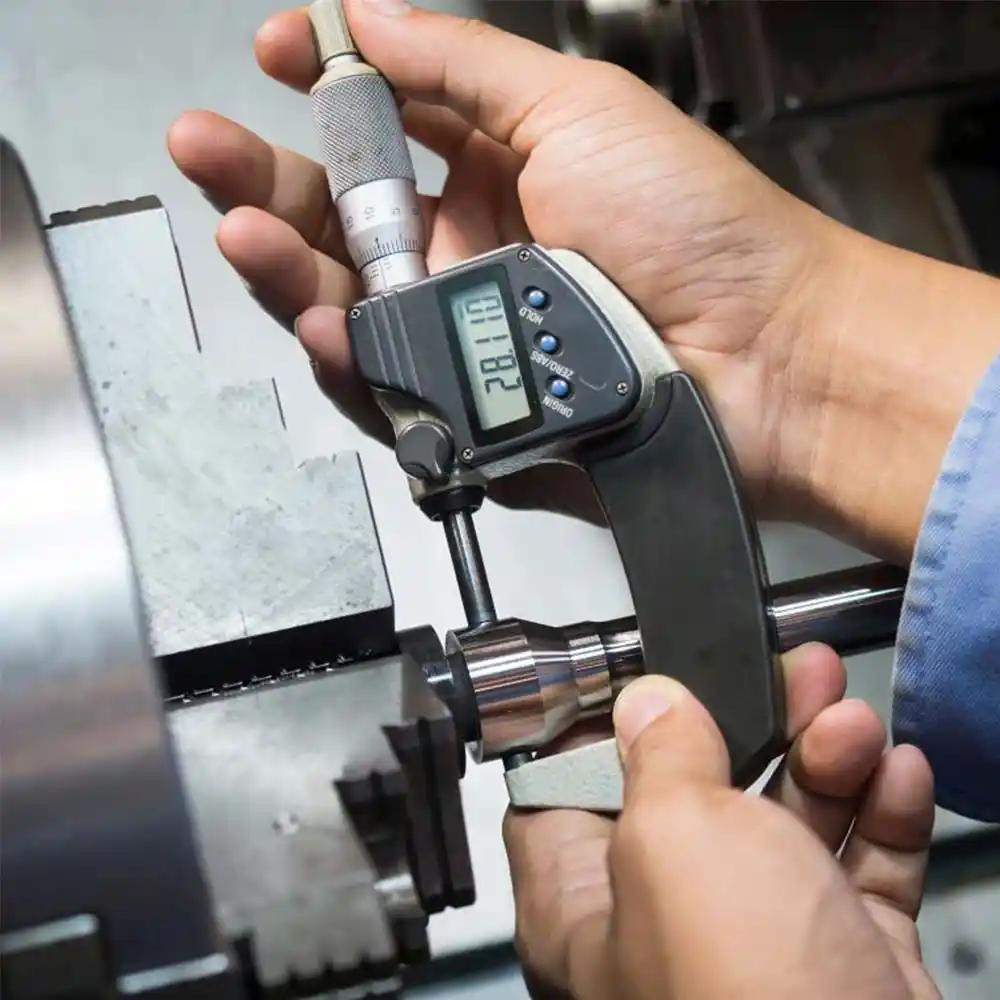
Modern machine shops use highly accurate metrology equipment to inspect tolerances. From micrometers and height gauges to advanced Coordinate Measuring Machines (CMMs), every part goes through a series of dimensional checks.
For ultra-precise parts, shops use air gauges, optical comparators, and even laser scanners. These tools ensure the final component meets spec—and builds client confidence in every delivered batch.

Materials and Their Impact on Tolerances
Not all materials behave the same under a cutting tool. Plastics expand, stainless steels harden, and aluminum can chatter. Each material has unique traits that influence how tight a tolerance can realistically be achieved.
Experienced machinists consider material properties before quoting tight tolerances. They also adapt speeds, feeds, and tooling strategies to accommodate these quirks—ensuring the final part is accurate and stable.
How Progressive Turnings Delivers on Precision
At Progressive Turnings, tight tolerance work is a daily expectation. With high-end CNC equipment, climate-controlled inspection areas, and a quality-driven team, they routinely hold tolerances as tight as +/- .0002”.
Their customers—especially in medical, aerospace, and automation—rely on this consistency. It’s not just about hitting a number on a print; it’s about ensuring that every part works flawlessly in the field, batch after batch.
Why Designers and Machinists Must Collaborate
Tolerances are often dictated during the design phase—but without input from machinists, parts may be over-engineered or under-specified. Collaboration between engineering and manufacturing ensures that tolerances are both realistic and functional.
Open dialogue between designers and machine shops helps reduce rework, manage cost, and deliver parts that meet performance goals without breaking budgets.
Final Thoughts: Precision Isn’t Optional—It’s Expected
Tight tolerances may seem like a technical detail, but they’re a major factor in part performance and product success. They reflect a manufacturer’s skill, process control, and commitment to quality.
In today’s demanding markets, clients aren’t just looking for a shop that can cut metal—they’re looking for a partner that can deliver precision without compromise. When tolerances matter, so does your choice of machine shop.