

CNC turned parts are the unsung building blocks of today’s most advanced technologies. From aerospace assemblies to life-saving medical devices, these round, symmetrical components provide the precision and consistency required in high-performance systems. Turned parts are created by spinning raw material on a CNC lathe while cutting tools shape the exterior and interior features with pinpoint accuracy. These parts can be simple pins or complex geometries with threads, grooves, and intricate profiles—all produced with exacting tolerances.
Manufacturers across industries depend on CNC turned parts for their reliability, speed, and cost-effectiveness. But not all turned parts are created equal. In this article, we’ll explore what makes CNC turning so essential to modern production, how top-tier shops manage every detail from material to finish, and what buyers should look for when choosing a partner for high-quality turned components. Whether you’re a product engineer, buyer, or curious customer, understanding how CNC turned parts are made—and why they matter—can give you a better perspective on the precision-driven world of advanced manufacturing.
Table of Contents
CNC Turned Parts: The Foundation of Precision Manufacturing
CNC turned parts are essential across industries like aerospace, medical, automation, and transportation. These parts are produced using lathes or Swiss-style machines that rotate material while cutting tools shape the final dimensions.
At the heart of precision manufacturing, CNC turned parts offer tight tolerances, repeatability, and clean surface finishes. Whether it’s a threaded connector, precision pin, or housing component, these turned parts must meet exacting standards from the very first cut. In this article, we’ll break down what CNC turning involves, what industries rely on it, and why it plays such a crucial role in quality-driven production.
How CNC Turning Works in a Modern Shop
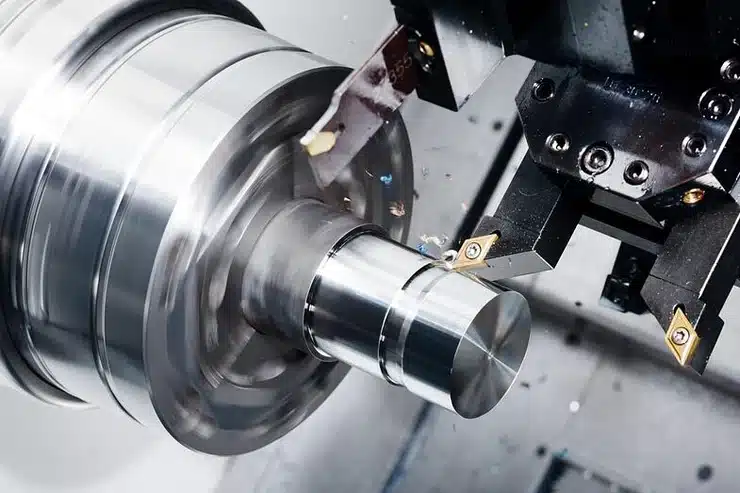
CNC turning uses computer-controlled lathes that rotate raw material—typically bars or billets—while stationary cutting tools remove material in circular paths. The result is a symmetrical, round part with precise outer diameters, bores, grooves, or threads.
Unlike milling, which removes material from static workpieces, turning excels at producing cylindrical shapes with extremely high efficiency. Shops today use live tooling, bar feeders, and sub-spindles to create complex features on both ends of a part, all in a single setup.
Applications Across High-Stakes Industries
CNC turned parts are the unsung heroes of critical applications. In the medical sector, they become orthopedic pins, implant screws, or surgical tools. In aerospace, they’re found in fuel nozzles, bushings, and turbine components.
Automotive and industrial automation also rely heavily on turned parts to assemble gear shafts, sensors, and fluid connectors. These industries demand not only consistent quality but also documentation, traceability, and repeatability—all of which high-level CNC turning shops are built to provide.

The Role of Material Selection in Turned Parts
The success of a CNC turned part begins with choosing the right material. Stainless steel, titanium, brass, aluminum, and engineered plastics each bring different strengths and machining behaviors.
Some materials offer corrosion resistance; others offer high strength-to-weight ratios or thermal stability. Shops experienced in CNC turning can recommend material options that balance performance, machinability, and cost—especially for demanding environments or regulatory specs.
Tooling and Setup: Where Precision Begins
Tooling is one of the most critical factors in CNC turning. Shops use a wide range of inserts, boring bars, grooving tools, and threading systems—all chosen based on the material and geometry of the part.
Proper setup minimizes vibration, deflection, and tool wear, helping maintain tight tolerances over long runs. High-end machines like the Tsugami SS32 offer features like live tooling and sub-spindle finishing to cut cycle times and reduce handling errors.
From Prototype to Production Runs
CNC turned parts aren’t just for high-volume production. Advanced turning centers can economically run small batches or even single prototypes. Quick-change tooling and digital programming allow shops to switch from one job to the next with minimal downtime.
This flexibility allows engineers to test designs early, then scale up to thousands of units once performance is validated. Shops that can support both ends of the spectrum provide long-term value as manufacturing partners—not just vendors.
Surface Finish and Post-Processing
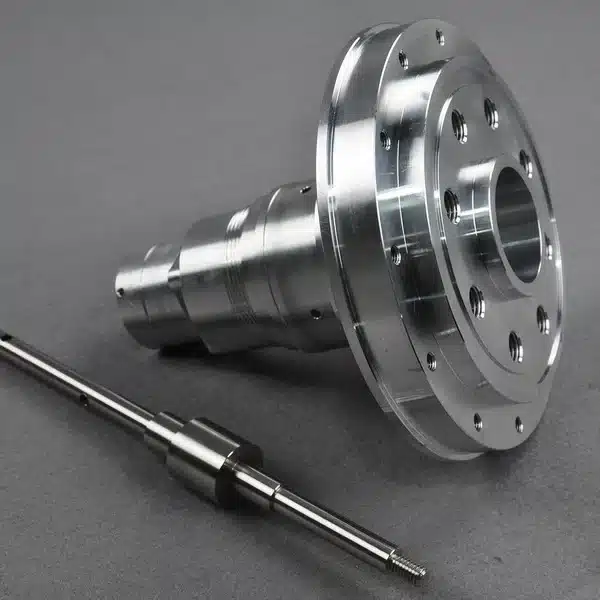
The surface finish of CNC turned parts is not just aesthetic—it often affects performance, especially in sealing or bearing applications. Turning can produce finishes as fine as 16 Ra or better when conditions are optimized.
Secondary operations like polishing, anodizing, passivation, or heat treatment may be added depending on the part’s end use. The ability to manage these processes in-house or through trusted vendors ensures part quality from raw material to final delivery.
Progressive Turnings: Experts in CNC Turned Parts
At Progressive Turnings, CNC turned parts are produced using advanced machines like the Tsugami SS32 and Okuma Genos lathe systems. With decades of experience and ISO 9001:2015 certification, they deliver consistent quality at scale.
Whether you need prototype quantities or production volumes in the tens of thousands, Progressive Turnings combines skilled operators, automation, and in-process inspection to ensure every part meets spec. Their customers trust them for tight-tolerance turned components across demanding applications.
How to Choose the Right Shop for Your Turned Parts
Not all machine shops are created equal. When evaluating a CNC turning partner, ask about their experience with your industry, certifications, inspection capabilities, and automation tools.
Can they scale with you? Do they offer traceability and quality documentation? Do they deliver on time with low scrap rates? The answers to these questions often matter more than price—and are reflected in the success of your end product.
Final Thoughts: Why CNC Turned Parts Drive Precision Forward
CNC turned parts may be small, but their importance is massive. From life-saving medical implants to aircraft components soaring at 30,000 feet, these parts must perform without fail.
For that reason, choosing a shop that treats every part with precision, care, and consistency is critical. As industries evolve and tolerances tighten, CNC turned parts remain a foundational element in the future of modern manufacturing.